Non-Woven Bags Compliance: 7 Critical Rules for EU & US Supermarkets
Problem – Agitate – Solution
Non-Woven Bags Compliance is critical for supermarkets and large retailers sourcing products from Asia. Many buyers worry about failing EU or US regulations. Rules are complex, suppliers often give conflicting advice, and certificates are often confused with compliance. This confusion causes shipment delays, extra communication, and unnecessary business risks. A clear compliance roadmap solves the problem efficiently.
Quick Answer
Non-woven bags exported to Europe or the United States do not require CE or mandatory product certification.
However, they must comply with chemical safety, environmental rules, labeling requirements, and special standards for food-contact or children’s products. Retailers should request non-woven bags compliance test reports, especially for EU REACH regulations and California Prop 65 compliance testing.
Why Continue Reading?
This guide provides a detailed checklist for procurement teams. It helps supermarkets and retailers verify compliance quickly, avoid shipment delays, and reduce legal risks.
1. Key Takeaways
- EU requires REACH compliance for all non-woven bags.
- Food-contact rules apply only when the bag touches food.
- Packaging regulations may apply depending on usage.
- US strongly recommends Prop 65 chemical testing.
- CPSIA applies only to children’s bags.
- TSCA covers chemical safety for all materials.
- State laws define thickness, labeling, and reusability.
- Compliance test reports, not certificates, are required.
2. Why Non-Woven Bags Do NOT Require Certification
Non-woven bags are considered textile products or consumer goods. Therefore:
- CE is not applicable
- No mandatory certificate exists
- Compliance is verified via test reports
Think of it like a cotton T-shirt: no CE mark exists, but chemical safety is expected. Retailers often mistakenly ask for CE or FDA certificates. The correct approach: request non-woven bags compliance test reports.

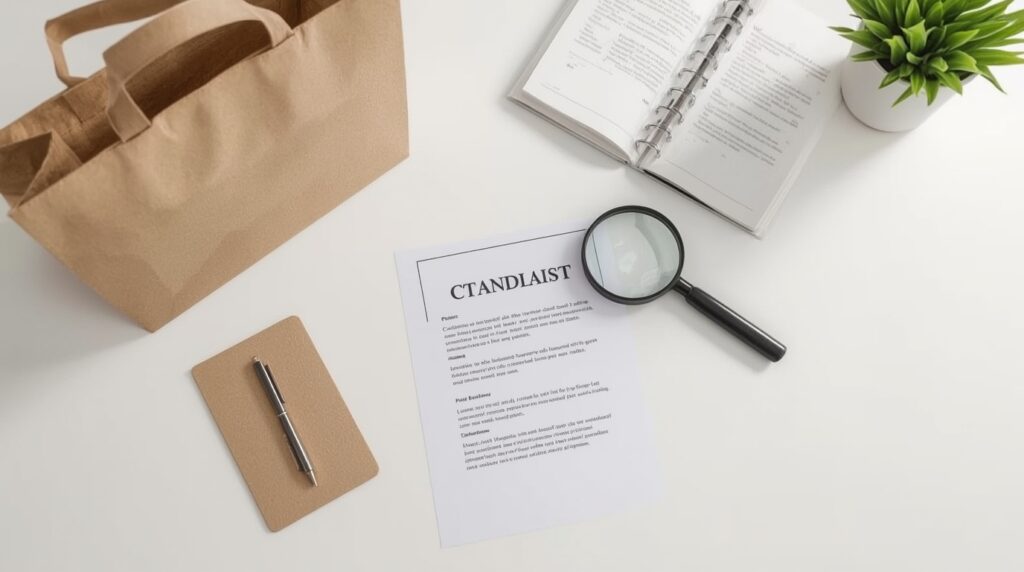
Alt text: Non-Woven Bags Compliance Testing in EU and US
3. EU Non-Woven Bags Compliance Requirements
Non-woven bags entering the EU must follow chemical safety and environmental rules.
3.1 REACH Regulation (EC 1907/2006) — Mandatory
REACH is the most critical EU requirement. All non-woven bags must comply with:
- Restricted substances (Annex XVII)
- SVHC < 0.1%
- Phthalates, heavy metals, PAHs, azo dyes
✔ Every EU shipment should include a REACH compliance report. Learn more on the official ECHA REACH page.
3.2 RoHS — Voluntary but Commonly Requested
RoHS restricts substances that may appear in inks, dyes, or laminations. Not mandatory for bags, but EU supermarkets often request RoHS compliance to reduce risks in printed or laminated materials.
3.3 EU Food-Contact Regulations (EC 1935/2004)
Applies only if bags are intended for food:
- Bakery non-woven bags
- Takeout food bags
- Promotional “food safe” reusable bags
Testing required: overall migration and specific migration tests.
✔ Regular shopping bags do not require food-contact testing. For testing references, see EU Food Contact Materials Guidance.
3.4 Packaging & Packaging Waste Directive (94/62/EC)
If the bag is used as packaging:
- Heavy metals ≤ 100 ppm
- Recycling and recovery requirements
Some supermarkets classify reusable non-woven bags as packaging.
✔ Compliance depends on bag usage.
3.5 Voluntary Eco Certifications
- OEKO-TEX Standard 100
- Global Recycled Standard (optional)
Not required by law but improves acceptance among EU buyers.

Alt text: Eco-Friendly Non-Woven Bags for EU Compliance
4. US Non-Woven Bags Compliance Requirements
US laws vary by state, but federal chemical safety and state rules must be followed.
4.1 California Proposition 65 — Strongly Recommended
Prop 65 applies to all products sold in California, including non-woven bags. Test for chemicals causing cancer or reproductive harm (e.g., phthalates, PAHs, heavy metals). More information: Prop 65 Official Page.
4.2 CPSIA — Only for Children’s Bags
If the bag is for children under 12:
- Lead and phthalate limits
- Tracking labels
- CPSC registration (specific cases)
✔ Adult shopping bags do not fall under CPSIA. Read details on the CPSC CPSIA page.
4.3 TSCA — Material Chemical Safety
TSCA ensures materials do not contain banned substances:
- PBT chemicals
- Certain flame retardants
- Certain plasticizers
Suppliers typically provide a TSCA declaration or testing report.
4.4 State-Level Reusable Bag Laws
Examples:
- California: thickness ≥100 gsm
- New York: thin plastic bag ban
- Washington: recycled-content labeling
✔ Bags must meet state-specific thickness, labeling, and recycling rules.
5. Summary for Retailers
Non-woven bags do not require CE or certificates. Retailers should verify:
EU:
- REACH ✔
- Food-contact tests ✔
- Packaging Directive ✔
- RoHS ○
- OEKO-TEX ○
USA:
- Prop 65 ✔
- TSCA ✔
- CPSIA (children only) ✔
- State bag laws ✔
Key: Request compliance test reports, not certificates.
Contact JiaRong Packaging
Email: [email protected]
WhatsApp: +86-13868368539
Get REACH, Prop 65, or food-contact reports for non-woven bags. JiaRong supports full documentation for supermarkets and retail chains.