Article Outline (Quick Summary)
- • What Oxford fabric is and how it is defined
- • How basket weave structure works
- • Fiber materials used in Oxford fabric
- • Key performance characteristics
- • Common denier (D) specifications
- • Coating and finishing options
- • Typical application areas
- • How to choose the right Oxford fabric
Key Facts at a Glance
| Item | Description |
|---|---|
| Fabric Type | Woven fabric |
| Weave Structure | Basket weave |
| Common Fibers | Polyester, nylon, cotton, blends |
| Texture | Fine grid / checker pattern |
| Strength Level | Medium to high |
| Common Uses | Shirts, bags, packaging, industrial covers |
| Finish Options | PU coating, PVC coating, functional treatments |
1. What Is Oxford Fabric?
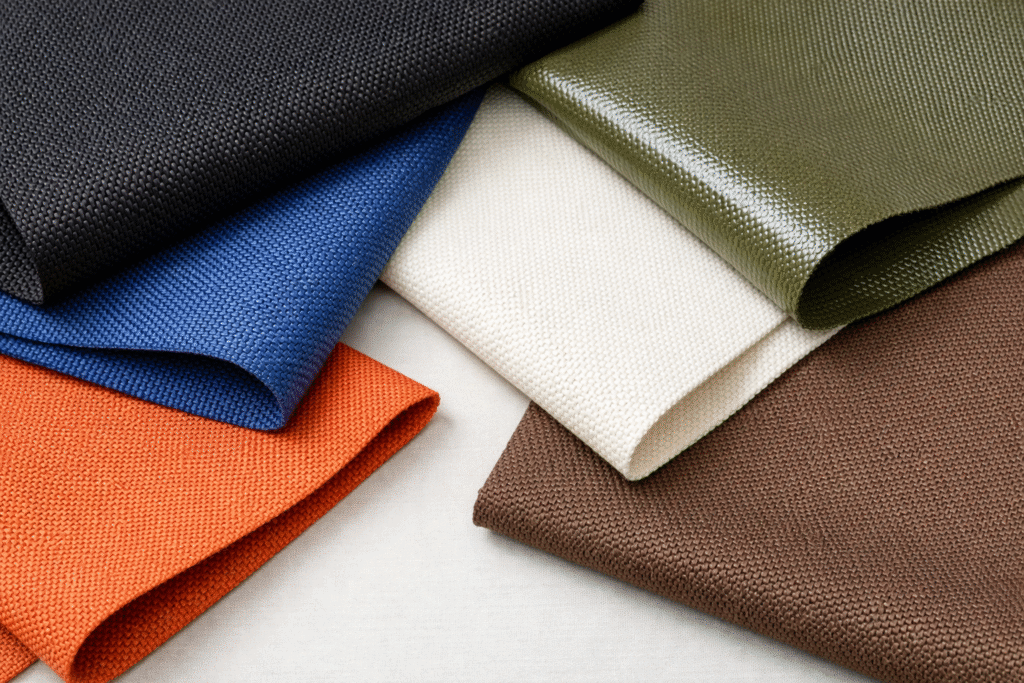
Oxford fabric is a woven fabric produced using a basket weave structure. In this structure, two or more warp yarns interlace with one or more weft yarns, forming a subtle square or grid texture on the surface.
Originally developed as a cotton shirting fabric, Oxford fabric has evolved into a broad material category. Today, it is commonly manufactured using polyester, nylon, or blended fibers, making it suitable for clothing, bags, packaging products, and industrial applications.
Rather than referring to a single material, the term “Oxford fabric” describes a combination of weaving method and yarn arrangement, with performance depending on:
- • Fiber type
- • Yarn thickness (denier)
- • Weave density
- • Surface finishing or coating
2. Basket Weave Structure Explained
2.1 What Is Basket Weave?
Basket weave is a variation of plain weave. Instead of one warp yarn crossing one weft yarn, multiple yarns are grouped together and interlaced as a unit.
Common structures include:
- • 2 warp yarns × 2 weft yarns
- • 3 warp yarns × 1 weft yarn
This grouped interlacing creates a visible grain or checker effect and improves structural balance.
2.2 Structural Advantages of Basket Weave
Compared with simple plain weave, basket weave offers:
- • Better load distribution
- • Reduced yarn slippage
- • Improved dimensional stability
- • Higher resistance to tearing
These properties explain why Oxford fabric performs well in bags and functional products that experience repeated stress.
3. Historical Background of Oxford Fabric
Oxford fabric originated in Scotland in the 19th century and was named after Oxford University, following the textile tradition of naming fabrics after prestigious institutions.
Early Oxford fabric was:
- • Made from 100% cotton
- • Used primarily for men’s shirts
- • Designed for durability and daily comfort
Classic Oxford shirts typically used colored warp yarns and white weft yarns, creating a yarn-dyed appearance that remains recognizable today.
As industrial needs expanded, the Oxford weave was adapted to synthetic fibers, greatly extending its use beyond apparel.
4. Fiber Materials Used in Oxford Fabric
4.1 Cotton Oxford Fabric
Cotton Oxford fabric is mainly used in apparel applications.
Key characteristics:
- • Soft hand feel
- • Natural appearance
- • Good breathability
Limitations:
- • Lower abrasion resistance
- • Higher shrinkage risk
- • Slower drying speed
Because of these limits, cotton Oxford fabric is rarely used for bags or packaging.
4.2 Polyester Oxford Fabric
Polyester Oxford fabric is the most widely used type in modern manufacturing.
Key characteristics:
- • High tensile strength
- • Strong abrasion resistance
- • Excellent shape stability
- • Good resistance to sunlight and chemicals
Typical applications:
- • Backpacks
- • Tote bags
- • Tool bags
- • Packaging bags
- • Industrial covers
Polyester Oxford fabric is often combined with PU or PVC coatings for water resistance.
4.3 Nylon Oxford Fabric
Nylon Oxford fabric is selected for higher-performance requirements.
Key characteristics:
- • Lightweight structure
- • Excellent tear resistance
- • Strong elasticity
- • Smooth surface feel
Common uses:
- • Outdoor equipment
- • Professional backpacks
- • Technical and protective bags
Compared with polyester, nylon offers better flexibility but usually at a higher cost.
4.4 Poly-Cotton Oxford Fabric
Poly-cotton Oxford fabric combines cotton and polyester fibers.
Key characteristics:
- • Balanced softness and strength
- • Reduced wrinkling
- • Better shape retention than pure cotton
This type is often used in light-duty bags or apparel-focused products.
5. Yarn Specifications and Denier (D)
Oxford fabric is commonly classified by denier (D), which measures yarn thickness.
- • Lower denier = lighter, finer yarn
- • Higher denier = thicker, stronger yarn
Common Denier Ranges
| Denier | Typical Use |
|---|---|
| 150D–300D | Linings, lightweight bags |
| 420D–600D | Backpacks, tote bags |
| 900D–1680D | Tool bags, heavy-duty covers |
Denier alone does not define quality. Weave density, fiber type, and coating quality are equally important.
6. Performance Characteristics of Oxford Fabric
6.1 Durability
Oxford fabric offers strong durability due to its basket weave structure and fiber strength.
- • Good abrasion resistance
- • Strong tear performance
- • Suitable for frequent use
6.2 Structural Stability
Oxford fabric maintains shape well, making it ideal for structured bags and packaging.
- • Less sagging
- • Better edge definition
- • Consistent product appearance
6.3 Breathability
Breathability depends on surface treatment.
- • Uncoated Oxford fabric allows limited air flow
- • Coated Oxford fabric prioritizes water resistance over breathability
6.4 Easy Maintenance
Compared with cotton fabrics, Oxford fabric:
- • Wrinkles less
- • Dries faster
- • Is easier to clean
This reduces maintenance costs in commercial use.
6.5 Functional Expandability
Through finishing processes, Oxford fabric can be enhanced with:
- • Water resistance
- • Oil resistance
- • UV protection
- • Flame retardancy
7. Coating and Finishing Options
7.1 PU Coating
PU coating provides flexible water resistance.
- • Lightweight
- • Soft hand feel
- • Suitable for bags and packaging
7.2 PVC Coating
PVC coating offers stronger protection.
- • High waterproof performance
- • Strong structure
- • Easy surface cleaning
Common in industrial applications.
8. Common Application Areas
8.1 Apparel
- • Oxford shirts
- • Casual uniforms
8.2 Bags and Packaging
- • Backpacks
- • Tote bags
- • Tool bags
- • Functional packaging bags
8.3 Outdoor and Industrial Products
- • Tents
- • Canopies
- • Equipment covers
- • Protective tarps
9. How to Choose the Right Oxford Fabric
When selecting Oxford fabric, buyers should evaluate:
- • End-use environment
- • Required strength level
- • Weight limitations
- • Appearance needs
- • Cost control targets
- • Compliance requirements
There is no universal best option—only the most suitable specification for the intended use.
10. Final Summary
Oxford fabric is a structurally engineered woven textile defined by its basket weave construction. Through changes in fiber type, yarn thickness, and finishing processes, it can serve a wide range of applications—from soft apparel fabrics to heavy-duty industrial materials.
Understanding its structure and performance characteristics allows manufacturers, buyers, and designers to make informed material decisions and achieve consistent product quality.
📧 Email: [email protected]
📱 WhatsApp: +86-13868368539