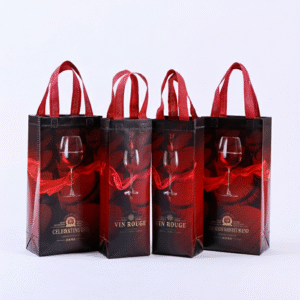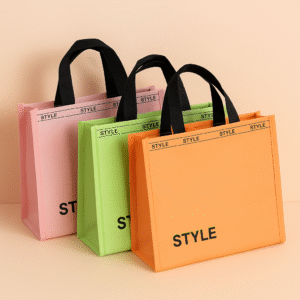
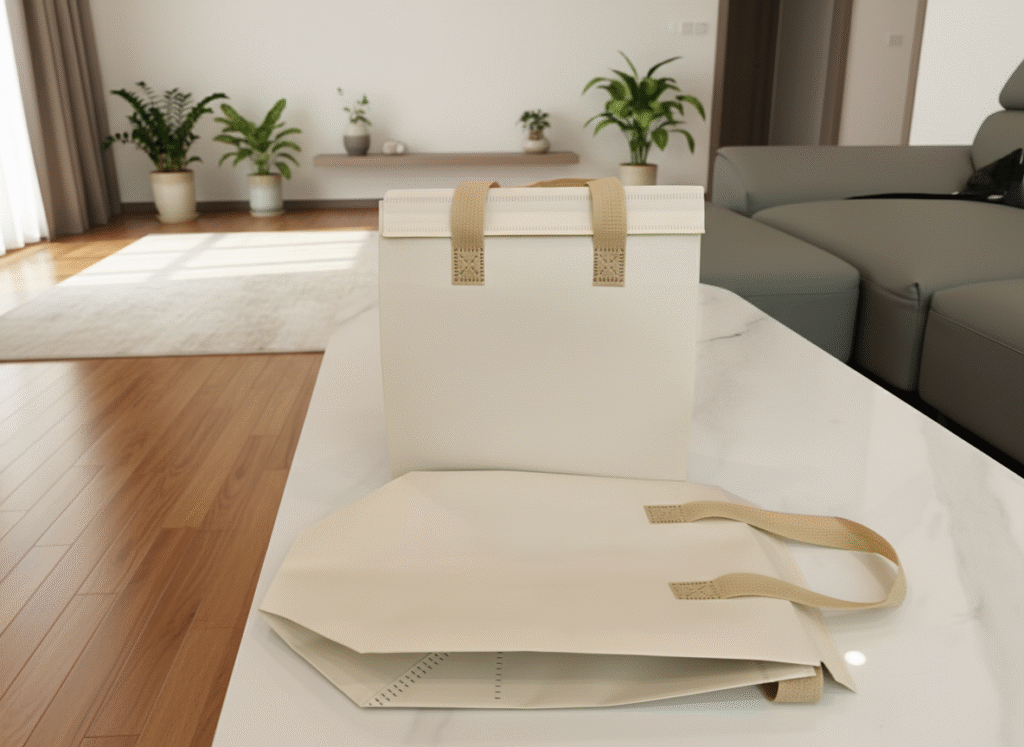
Many people notice that new bags—especially non-woven, laminated, or PP woven types—often have a distinct smell right after production.
This scent may seem strange at first, but it’s actually a normal result of modern bag manufacturing.
Let’s take a closer look at where it comes from, why it happens, and how to make it disappear.
Freshly made bags go through several stages that naturally produce odors.
The scent usually comes from raw materials, printing ink, lamination glue, and heat processing.
Non-woven bags are made from polypropylene (PP), a safe and widely used plastic.
When heated to form the fabric, PP releases a light plastic odor—similar to that “new car” smell.
It’s temporary and harmless.
Colorful logos and designs require printing.
Some factories use solvent-based inks, which need time for the solvent to fully evaporate.
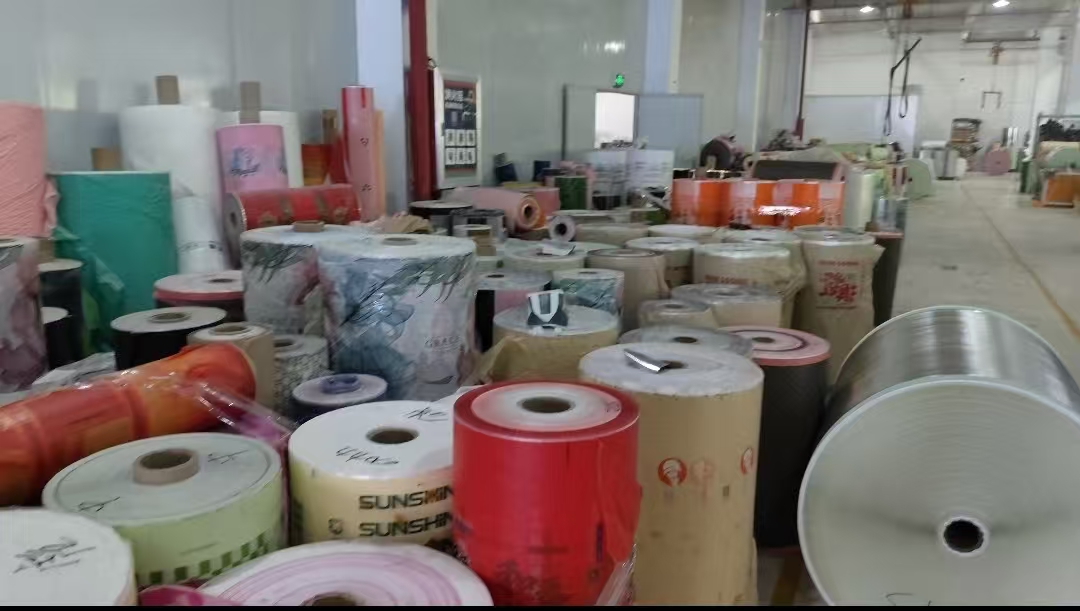
Laminated material waiting for the adhesive to fully cure
If packed too soon, traces of solvent may stay on the surface, giving the bag a mild “new ink” scent.
Laminated bags combine artwork and film layers using heat and glue.
When this process finishes, a faint adhesive smell can appear—similar to the scent of freshly bound books.
After exposure to air, it fades within a few days.
Newly made bags are often sealed right after leaving the machine.
They are still warm, and the smell gets trapped inside the packaging.
It’s like baking cookies and closing the oven—when you open it, the scent feels stronger because it has nowhere to escape.
Once unpacked and aired out in a dry place, the odor weakens quickly.
This natural ventilation is enough to make the bags odor-free.
A light smell from new bags is completely normal and safe.
Reputable manufacturers use certified, non-toxic materials that meet international standards.
The odor simply reflects the recent production process—similar to a new book or phone case smell.
After a short airing period, it naturally fades away.
For customers sensitive to smell, it’s best to unpack and ventilate the bags before use.
Many suppliers already follow this practice before delivery.
Experienced factories pay attention to every step that could affect product scent.
For example, using eco-friendly PP materials, water-based inks, and high-temperature curing helps reduce odor.
Good ventilation systems and pre-shipment airing also ensure the bags reach clients clean and fresh.
Factories like JiaRong take these steps seriously, not only to improve user comfort but also to show commitment to quality and sustainability.
- Unpack the bags and spread them out evenly.
- Keep them in a ventilated area for 24–48 hours.
- Do not spray perfume or alcohol—natural air is best.
- Sunlight can help speed up the process, but avoid strong or long exposure, as it may cause the color to fade slightly.
After airing, the smell disappears, leaving clean and ready-to-use bags.
A mild odor in new bags is simply part of the manufacturing process.
With better materials, careful printing, and professional handling, any smell is temporary.
After a bit of ventilation, the bags become perfectly suitable for retail, packaging, or daily use.
📧 Contact Effie: [email protected]
💬 WhatsApp: +86 135 7576 4151