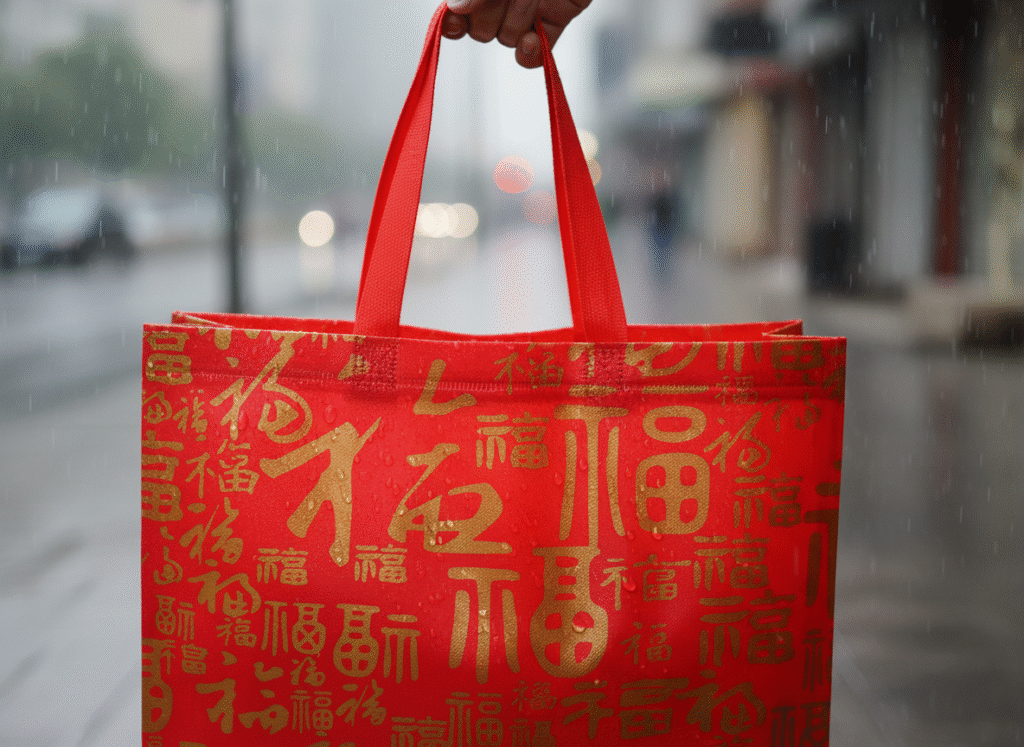
**Are Laminated Non-Woven Bags Really Waterproof?
A Practical Guide for B2B Buyers**
Outline Summary:
- 1️⃣ Laminated non-woven bags resist water but are not fully waterproof.
- 2️⃣ Whitening after water exposure is the most common issue; most cases are irreversible.
- 3️⃣ Primary causes include adhesive application, lamination pressure/temperature, and micro-gaps.
- 4️⃣ Film deformation after moisture creates permanent wrinkles or foggy surfaces.
- 5️⃣ Low-quality or aged materials increase whitening risk.
- 6️⃣ Water rarely penetrates fully, but appearance damage occurs first.
- 7️⃣ Factory inspection uses location, touch, and drying tests.
- 8️⃣ Proper storage and timely shipment help prevent whitening, odor, and hygiene issues.
- 9️⃣ Key takeaway: choose quality materials, monitor production, and adopt best handling practices.
1️⃣ Understanding “Water-Resistant” in Non-Woven Bags
- Non-woven fabric alone does not provide water resistance.
- Lamination adds protection but cannot fully prevent visual changes after water exposure.
- Micro-gaps exist between film and fabric, which may allow minor ingress at edges or stitching.
B2B Tip: Understanding the limitations of laminated bags helps buyers set realistic expectations for appearance and resale quality.
2️⃣ Why Laminated Bags Turn White After Getting Wet
Key Observation: Whitening is the most reported issue in bulk orders.
- Approximately 80% of whitening cases are permanent.
- Causes are mostly physical or process-related, not chemical.
2.1 Weak Bonding Between Film and Fabric
Typical Factory Causes:
- Uneven adhesive coating
- Insufficient lamination pressure
- Unstable lamination temperature
- Micro-gaps at edges, needle holes, or folds
Effect for Buyers: Water entering gaps may expand them, causing permanent whitening. This mainly affects visual quality and brand perception.
2.2 Film Deformation After Moisture
- PP film tension may vary during production.
- Coating layers may have micro-pores.
- Lamination stretch may be uneven.
Outcome: After water exposure, small wrinkles or foggy surfaces appear.
✅ Once dried, these changes are irreversible.
2.3 Minimal Chemical Effects
- Water exposure under normal conditions does not degrade polymer chains.
- Whitening is mechanical, caused by micro-gaps and uneven tension.
- Suggested client message:
“Appearance changes after water exposure are structural, not chemical.”
2.4 Aging and Low-Quality Materials
- Aged film rolls or recycled PP increase whitening risk.
- Thin films or low-quality adhesives exacerbate micro-gaps.
- Recommendation: Prioritize high-quality, fresh materials to maintain consistency across batches.
3️⃣ Does Water Actually Penetrate?
B2B Perspective:
- Small splashes → rarely penetrates the bag.
- Heavy rain → slow ingress possible through edges or stitching.
- Appearance changes occur first, often before any functional failure.
Implication: Visual quality is the primary concern for corporate or retail buyers.
4️⃣ Factory Inspection & Quality Checks
Inspection Methods Recommended for Buyers:
✔ Location-Based Assessment
- Whitening only at edges → water entered micro-gaps.
- Large-area whitening → adhesive or lamination issue.
- Spotty whitening → film material defect.
✔ Touch-Based Assessment
- Puffy or bubble-like → delamination.
- Wavy texture → film deformation.
- Persistent white → irreversible structural change.
B2B Tip: Applying these checks before shipment helps reduce complaints and maintain customer trust.
5️⃣ Proper Handling to Minimize Whitening
- It is suggested that you store the bags in a dry environment to help minimize moisture exposure.
- You may also consider arranging timely shipments and discussing with the factory if needed, to reduce the risk of whitening caused by extended storage.
- Proper storage combined with prompt delivery can help maintain the bags’ appearance, reduce odor risks, and support hygiene standards for corporate or retail use.
These measures are recommended practices and can be adapted according to your procurement schedule and supply chain process. Maintaining communication with your supplier typically produces the best results.
6️⃣ Factory Recommendations for B2B Buyers
- Source laminated bags from trusted factories with quality control.
- Verify adhesive coating, lamination pressure, and temperature stability.
- Use high-quality, fresh PP film.
- Inspect batches with location and touch checks.
- Adopt proper storage or timely shipment to reduce whitening risk.
Outcome: Following these practices can reduce complaints, maintain brand reputation, and improve inventory turnover.
7️⃣ Final Takeaways
- Laminated non-woven bags are water-resistant, not fully waterproof.
- Whitening is the main concern for visual quality and is mostly irreversible.
- Quality materials, controlled production, and careful handling and storage are key to reliability.
- For bulk buyers, understanding these factors helps maintain product quality, minimize returns, and protect brand image.
Contact JiaRong Packaging
Email: [email protected]
WhatsApp: +86-13868368539
JiaRong — providing professional laminated non-woven bags with consistent quality, reliable production, and actionable guidance for B2B clients.