6 Design Secrets to Create a Premium Look for Plaid Tote Bags
Turning Classic Patterns into Premium Visual Appeal that Wins Both B2B and Retail Markets
Outline – What This Guide Covers
- Color Strategy: Choosing sophisticated and balanced tones.
- Pattern Scale: Adjusting plaid proportions for market positioning.
- Material Selection: How different fabrics influence perceived value.
- Manufacturing Precision: The power of printing and weaving quality.
- Finishing Details: Handles, stitching, and presentation that elevate quality.
- Consistency Control: Keeping your plaid bags uniform across bulk orders.
Problem – Agitate – Solution (PAS):
Many B2B buyers face a common issue: plaid tote bags are timeless but easily look outdated or cheap when poorly designed. A lack of coordination between pattern, color, and texture can make even quality materials seem low-end. The solution is mastering the visual language that transforms plaid into a mark of craftsmanship and prestige.
Answer Summary:
This guide explains how to refine plaid tote bag design through thoughtful color pairing, balanced pattern sizing, premium materials, and consistent production—ensuring your bulk orders deliver not only style but lasting market appeal.
Keep Reading:
Behind every elegant plaid tote bag lies a harmony of design precision, cultural history, and manufacturing skill.
1. Choose Elegant and Balanced Color Palettes
Color is the first thing the buyer notices. A well-chosen color combination can make an ordinary plaid tote bag look exclusive. Instead of chasing flashy or trending hues, focus on timeless combinations that appeal across cultures and age groups.
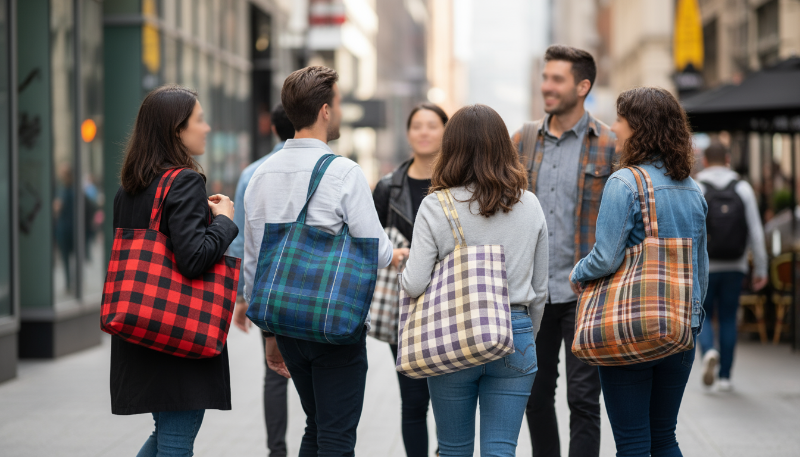
Classic palettes like beige with navy, black with white, forest green with cream, or wine red with gray convey elegance and reliability. These combinations are easy to match with clothing and suitable for supermarkets, apparel packaging, or brand merchandising.
Bright color contrasts—such as red and yellow or purple and teal—should be used cautiously. They may look vibrant but often cheapen the visual quality of plaid.
Design Tip: Earth tones dominate the premium segment in Europe and North America. For Asian markets, soft neutrals with one bright accent color often perform better.
Why Color Matters in B2B Sales
For wholesalers, color is more than aesthetic—it’s strategy. Buyers want products that move easily through retail shelves. A neutral yet refined palette fits multiple end-use scenarios, reducing leftover stock risk and ensuring consistent reorder potential.
2. Adjust the Scale of the Plaid Pattern
The pattern’s scale dramatically impacts how the bag feels to the eye. Small plaids, with fine lines and compact grids, appear tidy and delicate. They fit boutique stores, fashion packaging, or cosmetic brands that favor subtle elegance.
Large plaids, on the other hand, express confidence and visibility. They suit lifestyle retailers, supermarkets, or gift bag distributors who want strong visual identity on crowded shelves.
Finding balance between these two extremes is key. Medium-scale plaid patterns usually provide the best visual rhythm for most B2B clients. They read clearly from a distance yet retain detail up close.
Visual Insight: The human eye tends to associate small patterns with precision and quality, while larger patterns emphasize boldness and personality. Knowing your buyer’s market helps you choose the right size ratio.
Scaling for Bag Dimensions
A small tote with oversized checks may look awkward, while a large grocery bag with tiny checks might seem overly busy. Align pattern scale with bag size to maintain symmetry and flow. This alignment is one of the hallmarks of a high-end product.
3. Upgrade Texture Through Material Choice
Material determines how a plaid design feels—not just looks. A premium design loses impact if printed on low-grade fabric. Each common bag material interacts differently with plaid patterns:
- Non-woven fabric: Lightweight and cost-effective. Best for promotional or short-term retail campaigns.
- Oxford cloth: Offers a strong, textured surface with high tear resistance. Great for fashion-forward or outdoor markets.
- PP woven fabric: Durable and suitable for heavy loads. Can be laminated for glossy or matte finishes.
- Cotton canvas: Natural, breathable, and elegant. Ideal for sustainable product lines or gift packaging.
The Role of Lamination and Coating
Adding lamination—either glossy or matte—enhances durability and improves color sharpness. Gloss brings modern shine; matte adds understated luxury. For European premium retail chains, matte finishes often outperform glossy ones in customer preference surveys.
Professional Tip: A semi-gloss lamination helps plaid lines stay vivid while maintaining a tactile fabric feel—perfect for both appearance and practicality.
4. Use Fine Printing or Weaving Techniques
A plaid design’s success depends on technical precision. Misaligned lines or blurry edges instantly downgrade perceived quality.
High-quality printing ensures that every stripe meets perfectly, keeping the pattern crisp and symmetrical.
Printing Options
- Gravure printing: Offers sharp lines and consistent ink coverage.
- Flexographic printing: Efficient for high-volume non-woven production.
- Digital printing: Suitable for small batches or custom color variations.
For the most luxurious finish, woven plaid fabrics are unbeatable. Instead of printed color, the design comes from interlaced threads. This method adds real depth, giving the bag texture and authenticity that printed surfaces can’t fully replicate.
Manufacturing Insight: In JiaRong Packaging’s plaid series, tight color registration is monitored per batch to ensure perfect grid alignment even under high-speed production.
Aligning Design with Machinery
Before finalizing production, confirm your supplier’s machine width, printing unit alignment, and lamination method. These technical aspects influence how the plaid appears once folded and stitched. A professional supplier will provide layout proofs to ensure symmetry after assembly.
5. Add Premium Touches: Handles, Stitching, and Finishing
Even the most beautiful plaid loses value if the finishing looks rough. Details are what separate a $0.50 bag from a $2.00 product in the buyer’s perception.
Handle Options
- Cotton handles: Soft and natural; enhance eco-friendly branding.
- PP woven handles: Strong and color-coordinated with the main body.
- PU leather handles: Add luxury appeal for premium gift packaging.
Stitching and Reinforcement
Plaid patterns highlight straight lines—making misaligned seams noticeable. Reinforced stitching at handles and corners maintains shape and durability.
For machine-made models, ultrasonic sealing combined with thread reinforcement creates a seamless yet sturdy result.
Supplier Example: JiaRong applies double stitching for handle reinforcement and conducts random tension tests per 1000 pieces to ensure consistent quality.
Labeling and Branding
Subtle logo placement in a corner or woven label form complements plaid designs without disturbing the symmetry. Gold or white printing pairs especially well with darker plaid bases.
6. Control Consistency Across Bulk Orders
For B2B buyers, consistency equals reliability. Plaid patterns magnify even minor misalignments between batches. Differences in ink density, lamination gloss, or fabric thickness can create visual mismatches once bags are stacked together.
Pre-Production Testing
Always request a pre-production sample (PPS) before bulk manufacturing. This helps verify pattern alignment, handle attachment, and material texture.
Color and Printing Control
A reliable factory uses Pantone color management and colorimeter testing to maintain tone consistency. Ask the supplier how they monitor ink viscosity and drying speed during large runs—it directly affects final hue.
Storage and Packing
Before shipment, bags should be air-vented to reduce any ink or adhesive odor, especially for newly printed plaid products. If the client is sensitive to smell, suppliers can delay packing for a day or add odor-neutralizing agents.
Professional Insight: Minor ink smell is normal—it means the product is fresh. With good ventilation, it dissipates quickly and doesn’t indicate poor quality.
Conclusion: From Classic Pattern to Premium Business Asset
Plaid tote bags carry a legacy few patterns can match. They have evolved from Scottish heritage to modern fashion while keeping their universal appeal. For B2B buyers, this makes plaid both a safe and strategic choice.
By mastering these six design secrets—color balance, scale precision, material selection, production accuracy, detail finishing, and consistency control—wholesalers and distributors can turn ordinary tote bags into premium products that speak of reliability and taste.
When design meets discipline, plaid becomes more than a pattern—it becomes a business language of trust and quality that customers instantly recognize.
Contact JiaRong Packaging for customized plaid tote bag production:
📧 Email: [email protected]
📱 WhatsApp: +86-13868368539