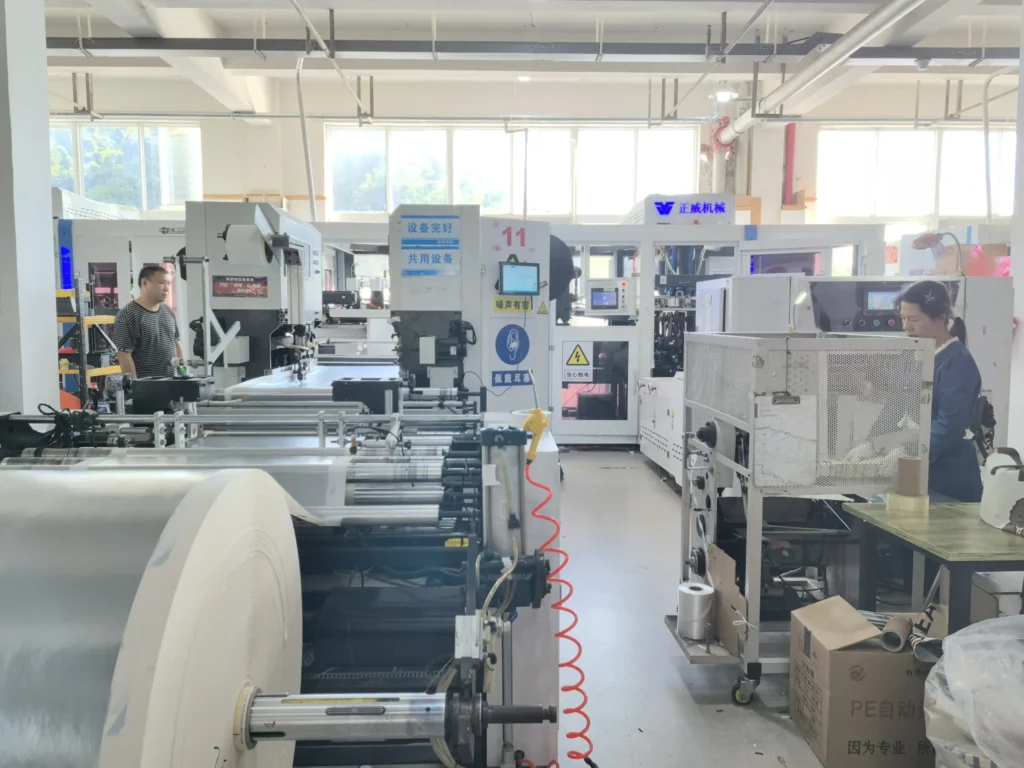
10 Steps to Find a Reliable Insulated Bag Supplier
The Ultimate Procurement Guide for B2B Buyers
1. Summary List
- Understand what defines a reliable insulated bag supplier.
- Evaluate material quality beyond appearance.
- Inspect production capability and factory scale.
- Verify certifications and compliance.
- Assess communication and response speed.
- Review sample quality and consistency.
- Identify hidden red flags early.
- Compare pricing with long-term stability.
- Visit or audit the factory if possible.
- Build long-term partnership trust.
Problem–Agitate–Solution (PAS) Introduction
Finding a reliable insulated bag supplier sounds easy until problems appear — late deliveries, inconsistent quality, or unanswered messages. Each issue costs time, money, and customer trust. The good news is that most of these risks can be prevented with a clear supplier selection process.
Answer Summary
A reliable insulated bag supplier combines quality consistency, transparent communication, and stable production capability. Checking material standards, certifications, and on-time performance helps buyers make informed decisions and avoid unstable partners.
Let’s walk through the full guide and see how professional buyers select trusted suppliers step by step.
As a Sales Employee’s Observation
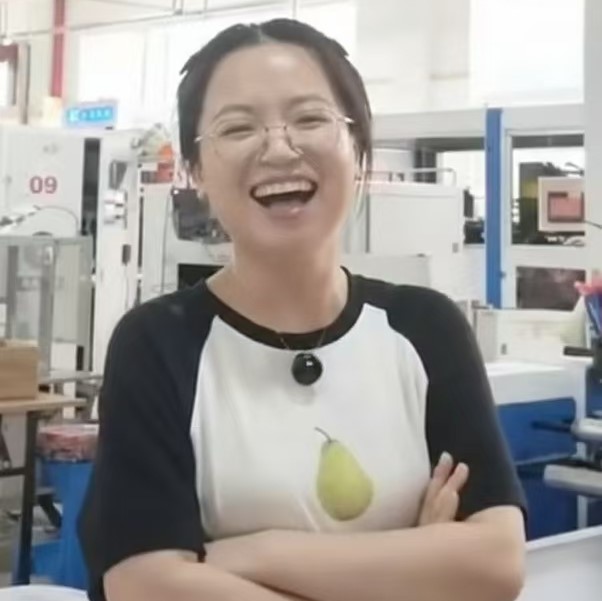
As a sales employee in a hand-held bag factory, I interact with B2B customers from around the world daily. I am sometimes surprised to discover that clients switch suppliers not only because of price, but also due to unstable bag quality, delayed deliveries, or suppliers disappearing after the first order. These experiences show that supplier reliability is just as important as cost when sourcing insulated bags.
Many buyers focus on the lowest quotation first. But in practice, the cheapest option can quickly turn into the most expensive one once hidden costs — like product returns or shipping delays — appear. Understanding what makes a supplier reliable is therefore essential.
1. Understanding Supplier Reliability
Reliability means more than simply “delivering on time.” It refers to a supplier’s ability to consistently meet quality standards, communicate clearly, and remain stable over multiple orders.
In the insulated bag industry, reliable suppliers usually show three signs:
- Transparent production capabilities (factory photos, machine lists, certificates).
- Stable raw material sources.
- Long-term export experience and repeat customers.
If any of these are missing, the risk of inconsistent product quality increases significantly.
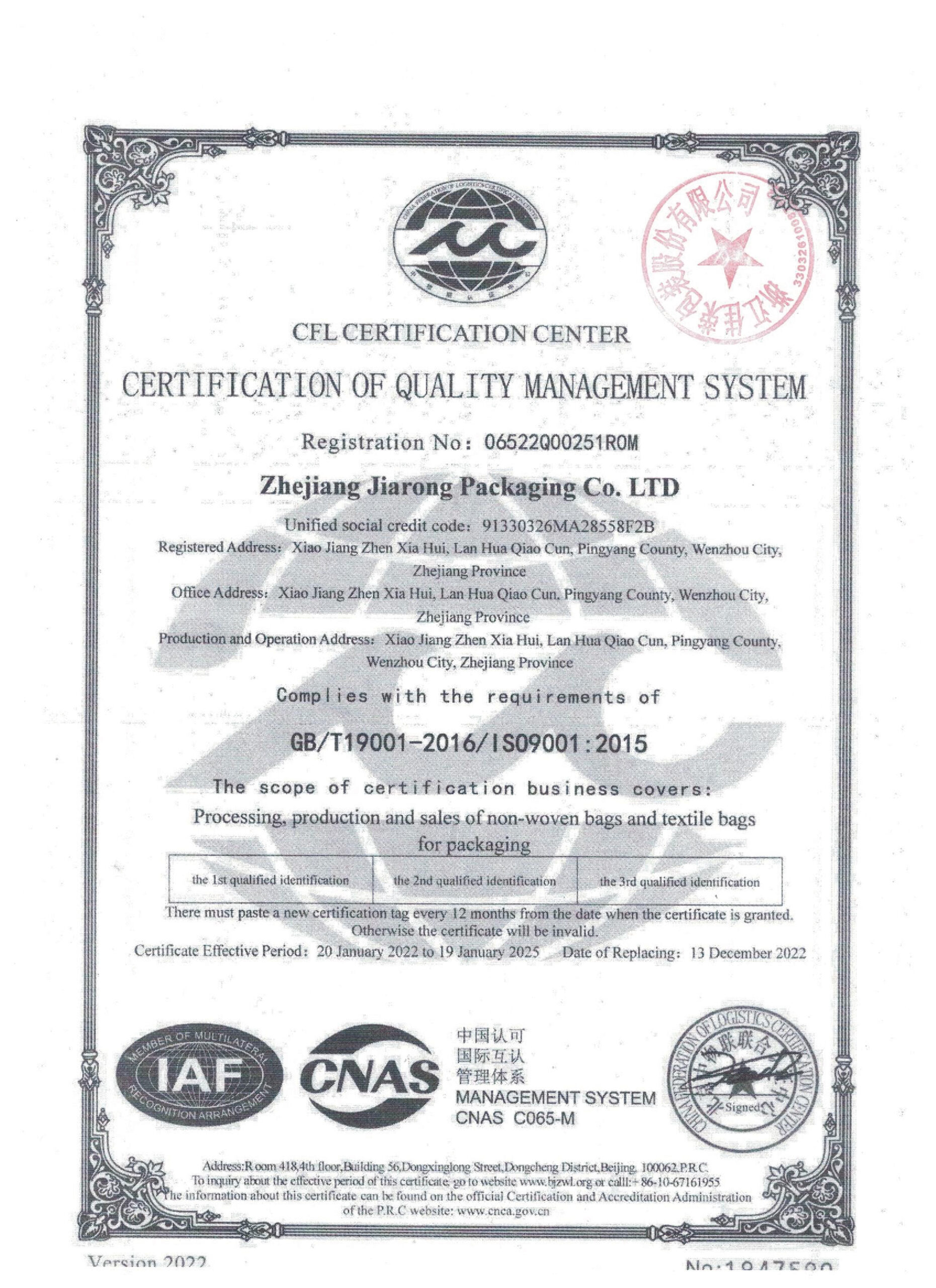 ISO 9001 Quality Management Certificate ISO 9001 Quality Management Certificate |
ISO 14001 Environmental Management Certificate |
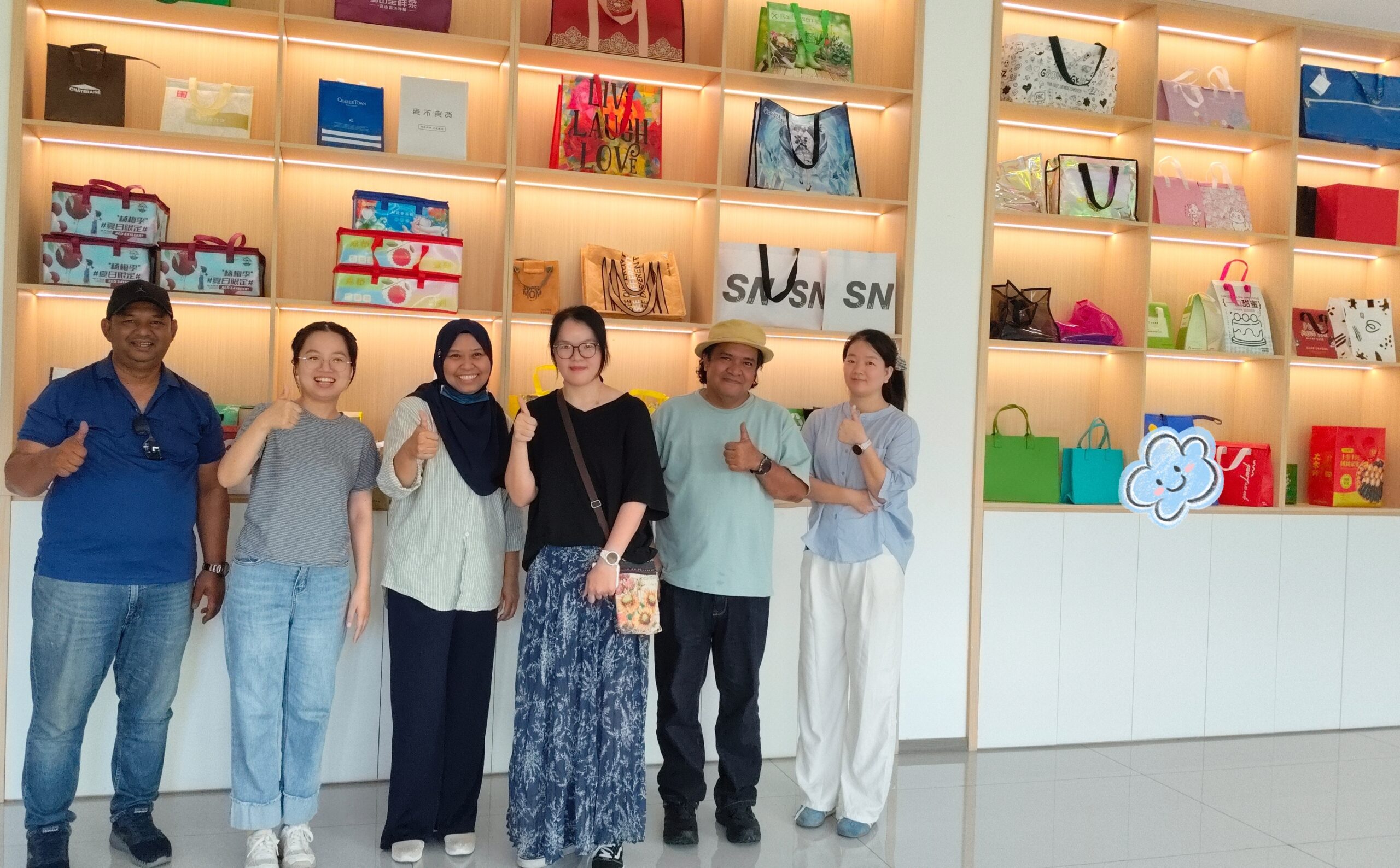 JiaRong with Overseas Customers JiaRong with Overseas Customers |
2. Evaluating Material Quality Beyond Appearance
Most insulated bags use materials like non-woven fabric, Oxford cloth, or laminated film, with inner linings made from aluminum foil or pearl cotton. The combination determines insulation performance and durability.
Buyers should not rely only on visual inspection. Instead, pay attention to:
- Fabric weight (GSM) — Heavier materials generally indicate thicker and stronger bags.
- Surface finish — Laminated or coated surfaces feel smoother and are easier to clean.
- Smell — A light ink or adhesive smell is normal, especially for freshly produced bags. It usually fades after ventilation. However, a strong or irritating odor may suggest poor-quality materials. If odor is a concern, buyers can request suppliers to leave bags ventilated before packing or take odor-reduction measures during production.
- Heat-sealing and stitching quality — Check seams for uniform bonding and no visible gaps.
Each batch may vary slightly — especially when using non-woven fabrics — but a reliable supplier ensures consistency within acceptable tolerance.
3. Checking Production Capability and Scale
A strong production base reflects how well a supplier can handle large or urgent orders.
When evaluating a supplier, ask about:
- Factory area and main equipment (e.g., non-woven machines, lamination lines, printing presses).
- Monthly output capacity — Does it align with your order volume?
- Automation level — Machine-made insulated bags ensure efficiency and consistency.
- In-house vs. outsourced production — Full in-house control reduces risk of subcontracting errors.
If possible, request a factory video or live call during working hours. A reliable supplier will gladly show real production conditions.
4. Verifying Certifications and Compliance
Certifications like ISO 9001:2015 indicate that a supplier follows quality management systems. For food-related or export products, additional compliance such as SGS, REACH, or BSCI audit reports may be necessary.
Reliable suppliers do not hesitate to share certificates, registration numbers, and audit results. If a supplier avoids these topics, treats them as “unnecessary,” or sends low-resolution photos, that’s a warning sign.
5. Evaluating Communication and Response Speed
Good communication is one of the most underrated signs of reliability.
A responsive supplier:
- Replies within 24 hours.
- Provides complete answers instead of one-line messages.
- Follows up on sampling and delivery progress proactively.
- Uses clear English (or other working languages) to avoid misunderstanding.
Poor communication during inquiry often predicts poor coordination later in production.
6. Reviewing Sample Quality and Consistency
Sampling is your best early-stage test.
Inspect the sample for:
- Dimensions and structure — Are they accurate and symmetrical?
- Logo print alignment — Off-printing is a common sign of weak control.
- Inner insulation layer — Is the aluminum foil even? Does the pearl cotton stay flat?
- Handle strength — Pull-test the handle; weak handles often break in transit.
If the supplier can provide a detailed sample inspection report or photo documentation, that’s a good indicator of professional workflow.
7. Identifying Hidden Red Flags Early
Unreliable suppliers often show subtle signs before issues become serious. Here’s a quick Supplier Risk Signal Table you can visualize in your checklist:
| Warning Sign | What It Means | Risk Level |
|---|---|---|
| Price significantly lower than market average | Possible poor materials or false promises | High |
| Refusal to provide factory details | Likely a trading intermediary | High |
| Frequent changes in quotation | Unstable management or lack of raw material control | Medium |
| Delayed replies or inconsistent communication | Poor after-sales service | Medium |
| Unclear payment or shipping terms | Financial or credibility risk | High |
Spotting these early can save months of negotiation loss.
8. Comparing Pricing with Long-Term Stability
In B2B sourcing, the best price is the one that stays stable. A supplier who changes prices every season due to fluctuating raw materials or subcontracting costs can harm your business planning.
Instead of asking “What’s your lowest price?”, ask:
- “How long can this price remain valid?”
- “What factors might change the price?”
- “Do you have long-term contracts with raw material suppliers?”
This conversation reveals whether the supplier operates with short-term profit or long-term partnership in mind.
9. Visiting or Auditing the Factory
A factory visit remains the most reliable verification step. If travel is difficult, request a third-party inspection or video audit.
During a visit, observe:
- Cleanliness and organization of production lines.
- Worker professionalism and safety measures.
- Material storage — are rolls of fabric and foil kept dry and well-arranged?
- Packaging process — is it careful, or rushed?
A professional setup reflects stable management and predictable output.
10. Building Long-Term Partnership Trust
Once a reliable supplier is found, maintaining the relationship is just as important as discovering it.
Practical steps include:
- Starting with a trial order before large commitments.
- Giving clear specifications and quality expectations in writing.
- Providing feedback with photos after receiving each shipment.
- Rewarding consistent performance with long-term contracts or stable volume.
Partnership trust doesn’t happen overnight. But suppliers who see stability from your side will also prioritize your orders in return.
Final Thoughts
Finding a reliable insulated bag supplier is both a technical and relationship-based process. It requires patience, attention to detail, and transparent communication.
In the global B2B market, where many buyers rely on unseen production, the right supplier can become your quiet partner — one that protects your brand’s reputation with every well-made bag.
Contact Information
📧 Email: [email protected]
📱 WhatsApp: +86-13868368539